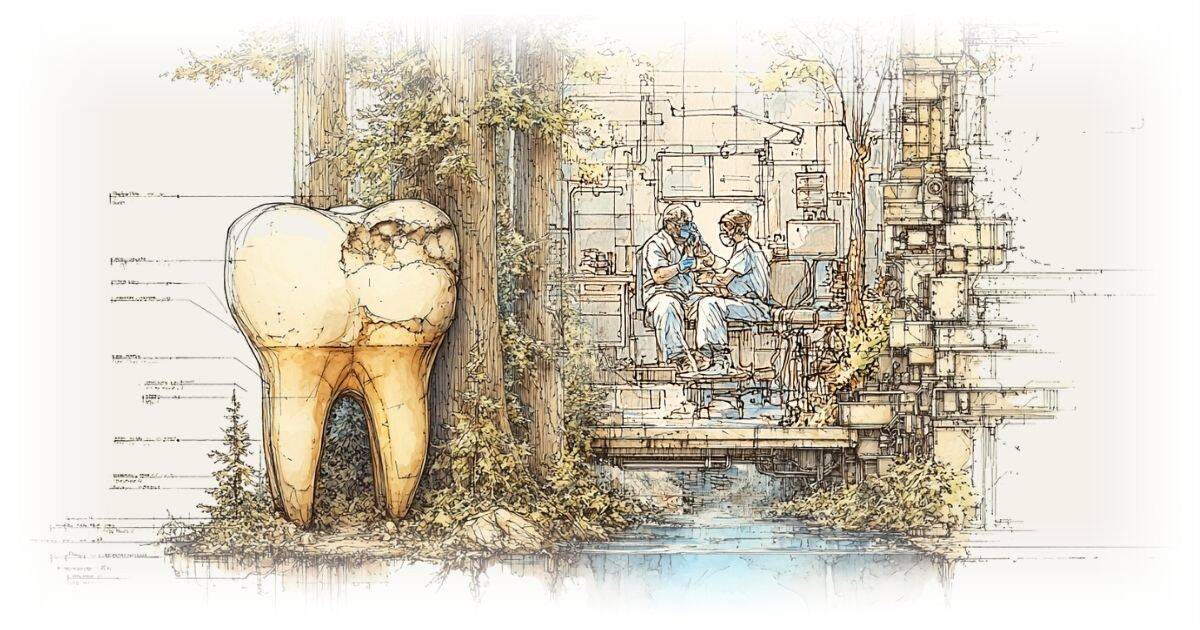
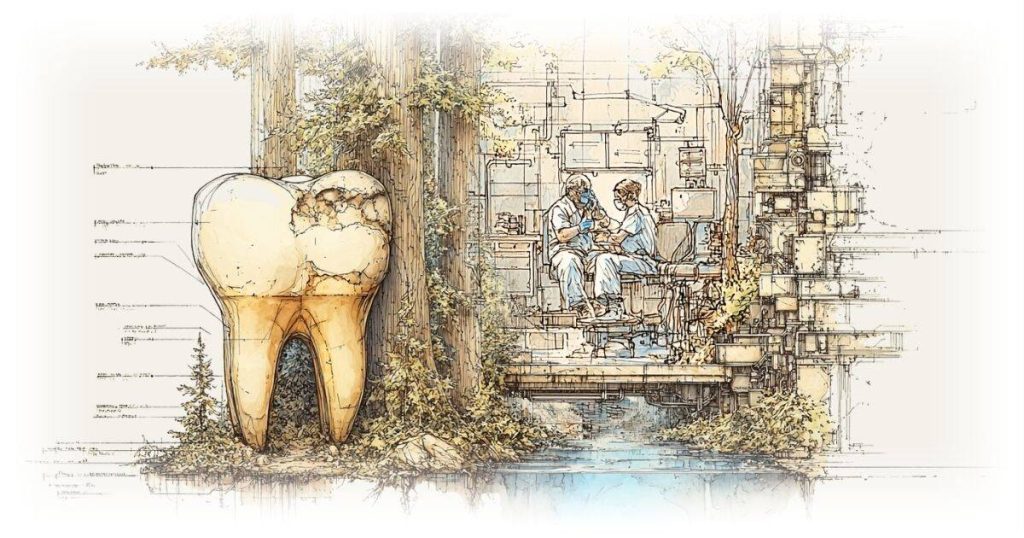
You are leaning over Mr. Jones, spotting that sneaky interproximal decay before it wrecks his smile. Spot on, as always.
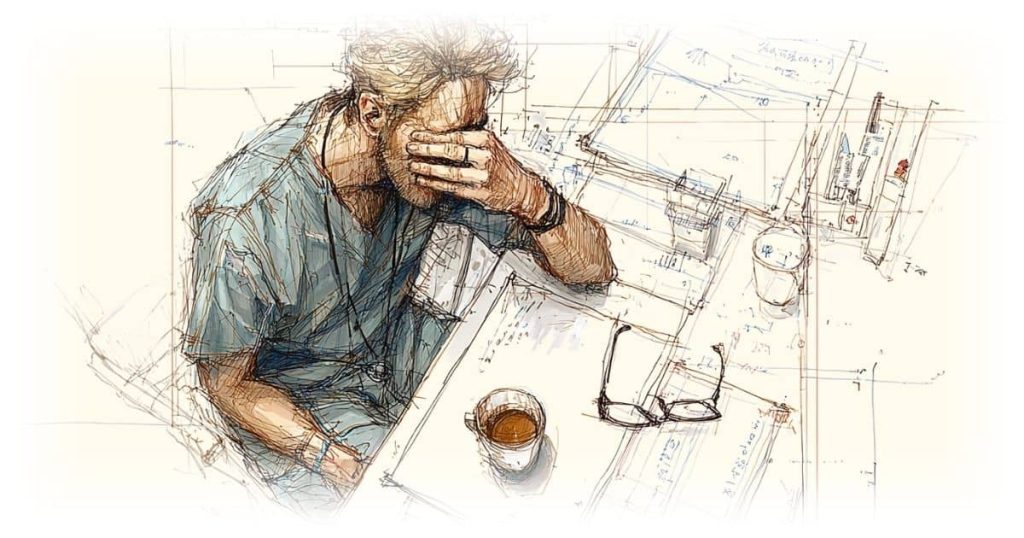
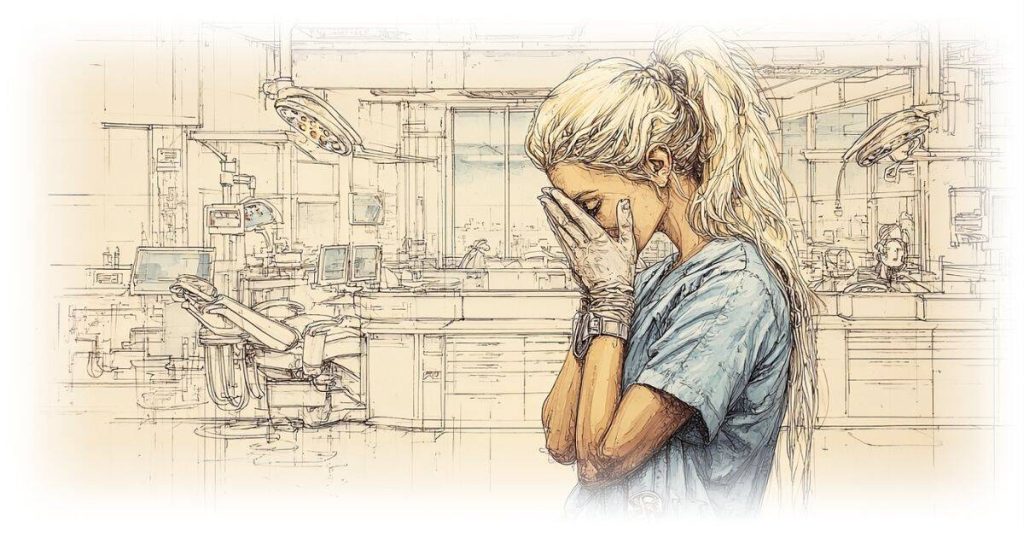
But later that night? You are the one crumbling. Neck screaming from ten hours hunched. Mind numb. Soul somewhere you cannot quite reach.
“You have fixed thousands of teeth and ignored the thing rotting your own well-being. I know. I did the same thing for twenty-two years.”
The Routine Nobody Questions
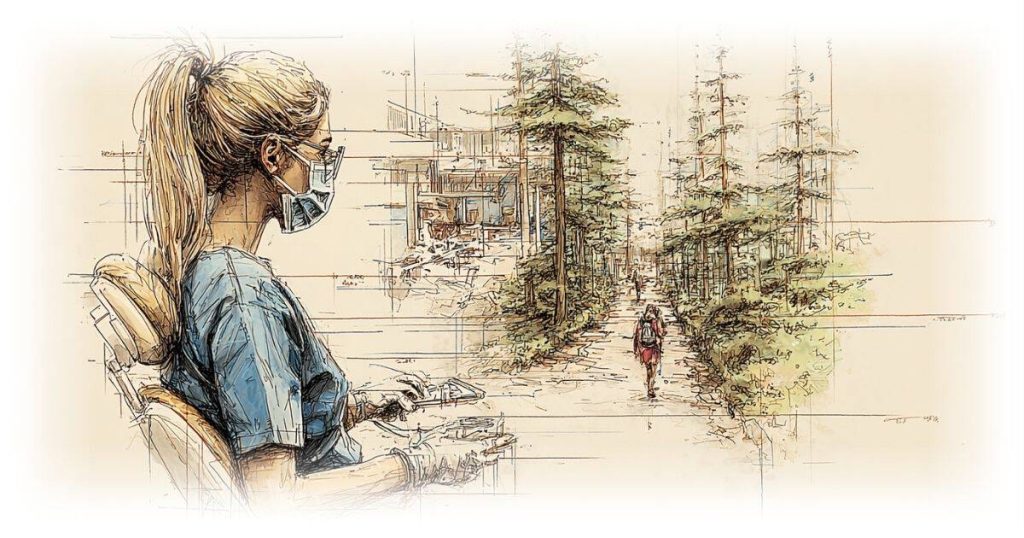
Think about your day. Really think about it. You show up, fill cavities, do extractions, prep crowns, perform root canals — again and again — in positions your body was never designed to hold for that long.
At the same time, you are managing your team, your practice, your patients. And it is not just clinical work, is it? You have to be a psychologist in that chair. You have to read people — adapt to whatever emotional energy they bring into the room. Fear. Anxiety. Anger. Resistance. Every single appointment, you are absorbing something.
We hear it constantly: I hate the dentist. I do not want to be here. And we absorb that. Consciously or unconsciously, we take it in.
Dental school taught us to handle the mouth. It never taught us to handle ourselves — our emotionality, our resilience, how to decompress the pressure that builds day after day, year after year. And that accumulated pressure does not just disappear. It gets suppressed. In the body. In the energy. In the mind.
That is the real cavity.
Why Dentistry Quietly Breaks People
We chose this profession for good reasons — the precision, the transformation, the stability. But the reality is something different.
The physical toll is relentless. Hunched postures, vibration tools, repetitive strain. Your back, your neck, your hands — they are all speaking to you. Most of us just stop listening.
The emotional weight is invisible. Patient no-shows, complaint fears, the moral injury of rationed care when you know someone needs more than the system allows. The disillusionment creeps in so gradually you barely notice it is there.
The overload becomes normalized. Extra hours, chasing contracts. Sleep is sacrificed. Family time disappears. The passion that once drove you evaporates, and you cannot pinpoint when it happened.
The Habits That Keep Us Stuck
Burnout is not random. It is wired into patterns we have been running for years, often without realizing it.
The perfectionist trap. ‘One more patient’ turns into sixty-hour weeks. The same precision that makes us brilliant clinicians also makes us incapable of stopping.
The dissolved boundary. Emails at midnight. No lunch breaks. Work bleeds into home until you cannot tell where one ends and the other begins.
The isolation. Especially in solo practice, we become lone wolves. We skip the conversations that would help, and the cynicism grows in the silence.
The hustle myth. ‘Push through.’ ‘It will get better.’ We glorify endurance and mistake caffeine for resilience. But chronic overload does not build strength — it traps stress in the body with no way to complete the cycle.
The neglected check-up. We X-ray our patients religiously and completely ignore our own mental health. The result? Errors increase, joy disappears, and we keep going anyway.
The Disconnection — And Why It Matters
That accumulated, suppressed pressure creates a disconnection — from how we feel, from how we perform, from the people around us: our team, our family, ourselves.
And when that disconnection continues long enough, we build an identity around it. We become the person who copes. The one who handles everything. The one who does not need help. That identity hardens. And once it does, it is very difficult to see past it.
Three Things That Changed Everything for Me
I am not going to give you a ten-step program. What I will share is simpler — and harder.
Recognition. The first step is seeing it. Seeing what is happening, without the stories we tell ourselves about why it is fine. The numbness. The dread. The going-through-the-motions. Naming it is not weakness. It is the beginning of honesty.
Acceptance. This is the part most of us resist. Acceptance does not mean giving up. It means having compassion for yourself about what you are facing. You did not fail. The system you are inside was never designed to sustain the people who run it.
A decision — from clarity. Before you can change anything, you need to see clearly what you are dealing with. Not the version you have been performing for your colleagues and family — the real thing. And from that clarity, not from panic or desperation, you decide what comes next.
What Recovery Actually Looks Like
It is not dramatic. It is quiet. And it starts with small, honest movements.
Audit what is draining you. Spend a week tracking where your energy goes — not your time, your energy. What tasks leave you hollowed out? What can you delegate, reduce, or simply stop doing?
Create real boundaries. Not aspirational ones — actual ones. Emails off after a certain hour. A lunch break that is non-negotiable. Shifting from ‘I must hit every target’ to ‘sustainable practice serves everyone better’ is not weakness. It is wisdom.
Reconnect with presence. Three things you are grateful for today. Three minutes of conscious breathing. It sounds small because it is. But presence is what resets the frustration loop.
Break the isolation. Find your people. A peer group. A mentor. Even one honest conversation with a colleague can shift something. Vulnerability is not a liability — it turns colleagues into allies.
Rebuild from the foundation. Sleep. Nourishment. One evening a week that has nothing to do with dentistry. These are not luxuries. They are the infrastructure that holds everything else together.
The Real Question
You are an expert at prevention. You have spent your entire career catching problems early in other people. What would happen if you turned that same attention on yourself — just once, honestly?
“That cavity you have been ignoring — it is still reversible. But not by pushing harder. Not by optimizing your schedule. By stopping long enough to see what is there.”
Recognition. Acceptance. A clear decision. That is where it starts.
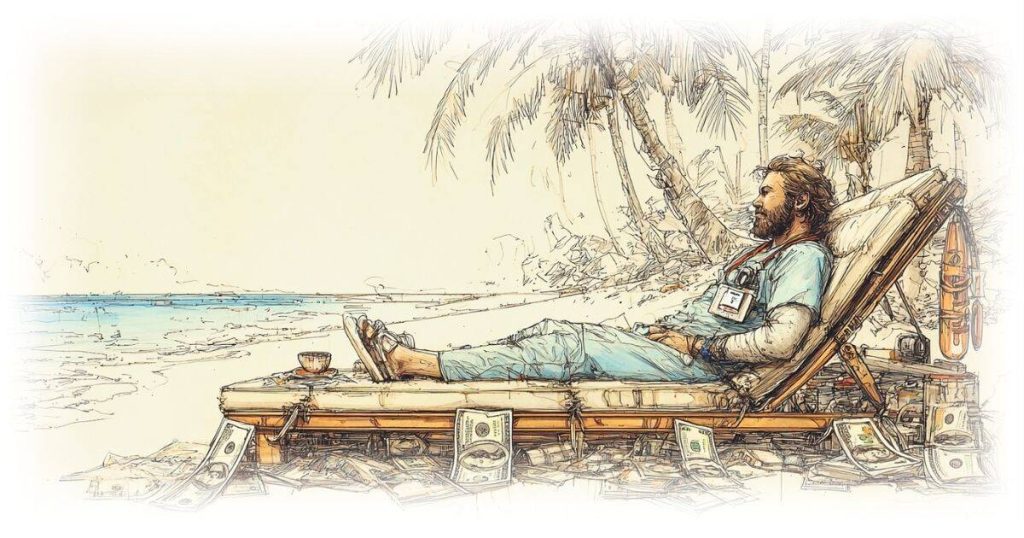
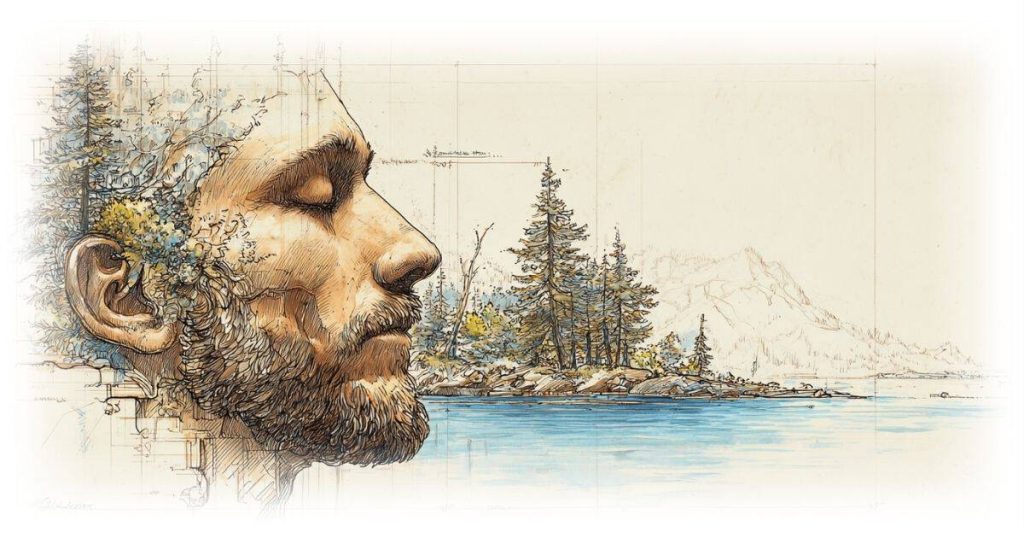
I went from a place I do not talk about lightly to building a life on an island in the Pacific Northwest that I could not have imagined during those dark years in practice. Not through hustle. Through honesty.
If something in this landed — if you felt that flicker of recognition — I would genuinely like to hear from you. Not to sell you anything. Just to talk. Sometimes one honest conversation is the thing that cracks everything open.
-Dr. Georgios Kallivretakis