Estimated reading time: 3 minutes
The cost that your clinic never sees — but your family does.
The clinical version of burnout is the one most dentists can name. The dread before a session. The emotional flatness mid-procedure. The exhaustion that sleep does not fix.
There is another version that rarely gets discussed. The one that does not stay in the practice.
What Walks Through the Front Door
You finish a session and drive home. At some point on that journey — maybe in the car, maybe at the front door — you perform a transition. You put away the dentist. You pick up the parent, the partner, the person.
Except you cannot quite manage it. Not tonight. Not this week. Not for months.
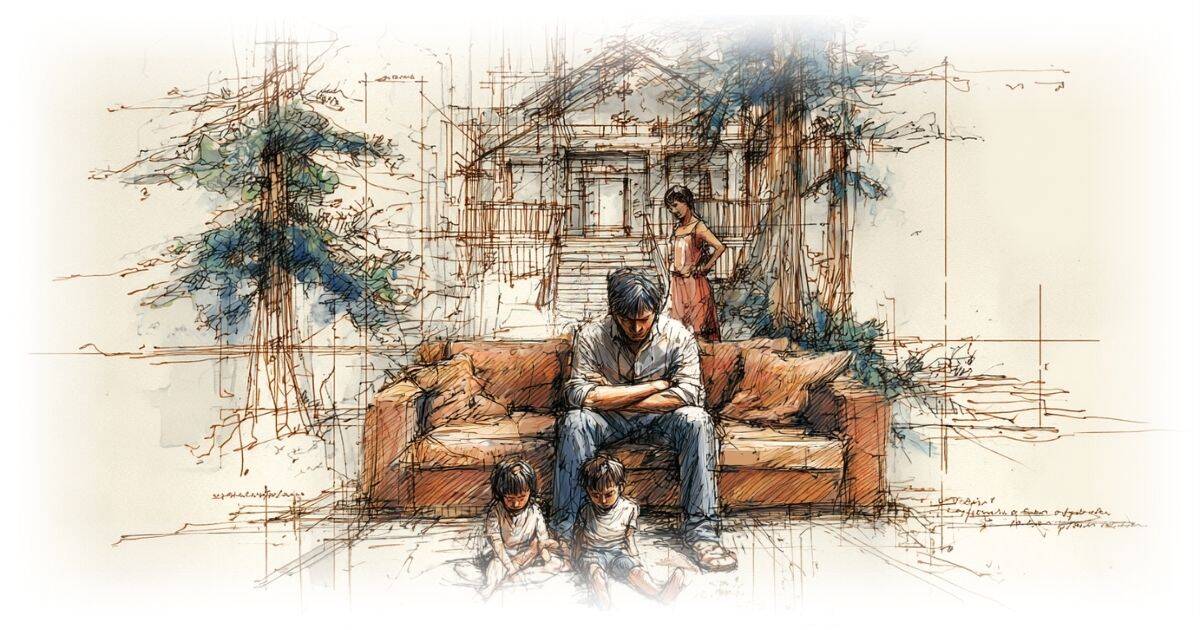
You are present in the room but absent in the ways that matter. The conversation your partner is having does not quite reach you. Your child shows you something they are proud of, and you respond correctly — you say the right words — but the warmth is not there. You are running on functional autopilot. And some part of you knows it.
“The people who love you have learned to read your silences. They know when you are there and when you are not. And increasingly, you are not.”
The Particular Loneliness of the High-Functioning Burnout
There is a specific loneliness in performing wellness for the people closest to you. Your colleagues see a competent professional. Your patients see someone engaged and present. Your family sees someone who is quiet, a little distant, harder to reach than they remember.
The mask is most exhausting at home — because home is where you no longer have the professional script to fall back on. You are just yourself. And when yourself is depleted, there is nothing to perform with.
Many of the dentists I work with describe a creeping guilt about this. The awareness that their burnout is not just a personal problem — it is something their family is living with them. That guilt adds another layer of weight to an already impossible load.
What Your Family May Have Already Noticed
Reduced tolerance for noise, mess, or unpredictability at home — the nervous system, already dysregulated, cannot absorb more stimulation.
Difficulty being present during leisure time — the professional mind keeps running: the difficult case, the complaint letter, the schedule next week.
Withdrawal from social connection — the energy required for social performance has been used up long before you get home.
Shorter fuse, longer silences, less laughter. The small daily expressions of affection and warmth that sustain relationships become harder to access.
Your family has likely noticed all of this. They may not have named it. They may be giving you space they do not fully understand, or expressing frustration without knowing why things feel different.
The Case for Getting Honest
One of the most important things I did in my recovery was tell the truth to the people I was closest to. Not a performance of honesty — the actual thing. ‘I am not well. I don’t fully understand what’s happening. I need some things to change.’
It was uncomfortable. It changed things. And it was infinitely less damaging than continuing to perform wellness at home while deteriorating quietly inside it.
Burnout thrives in silence and isolation. The clinical silence — not admitting it to colleagues — is well documented. The domestic silence is less discussed but equally costly.
Your family does not need you to have the answers. They need you to let them in to the question. That is the beginning of not going through this alone.
-Dr. Georgios Kallivretakis