Estimated reading time: 7 minutes
Part I: How I Got Here
“So… you are not practicing any more?”
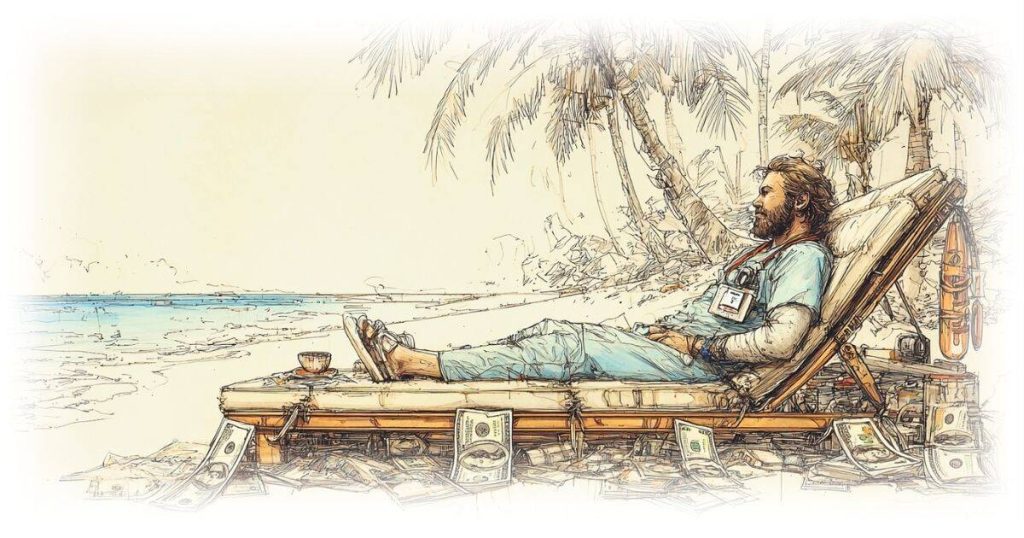
I smile now when people ask. “Actually, I work two to three months a year. The rest of the time, I am coaching.”
The confusion on their faces is always the same — as though I have said I am a dentist on Tuesdays and a circus performer on Thursdays.
But here is the thing: it makes complete sense to me. And increasingly, it makes sense to the burned-out dentists who contact me wondering whether there is a way forward that does not involve gritting their teeth for another twenty years or completely abandoning their degree. There is. I am living it.
What Actually Happened
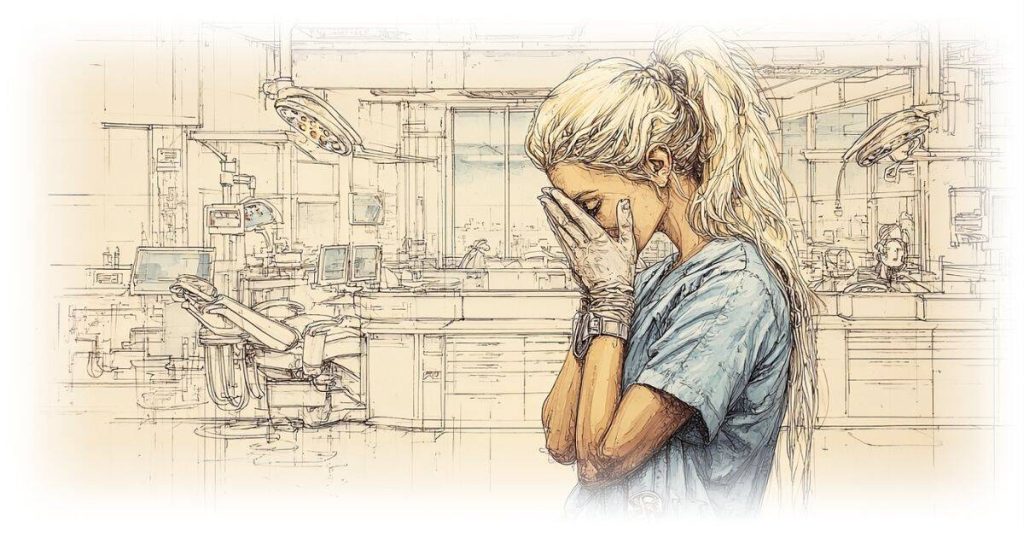
I did not dramatically quit dentistry in 2013. I crashed. Twenty-two years of clinical work, and suddenly my body said no — not ‘I am tired’ no. More like ‘I physically cannot make myself go into the practice’ no.
That year was dark. The kind where you question everything you have built your life around. Where your identity feels like it is crumbling and you do not know what is underneath. But somewhere in that darkness, I found something unexpected: space.
Space to ask questions I had never had time for. What do I enjoy? What energizes me versus drains me? Who am I when I am not performing the role of ‘dentist’?
The answers surprised me. I loved the problem-solving of dentistry but not the repetition. I loved helping people but not in three-minute increments between appointments. I loved using my hands but hated the physical toll.
I did not have to choose all or nothing.
The Part-Time Practice Discovery
Practicing two to three months a year was not some grand strategy — it evolved organically. At first, I just needed long breaks. Time to remember what I liked about dentistry when I was not exhausted. Time to train as a coach, to explore mindfulness, to figure out what else I might offer the world.
Then I noticed something: when I returned to clinical work after time away, I was good again. Present. Engaged. The things that had felt unbearable — difficult patients, running behind schedule, the precision demands — became manageable. Sometimes even satisfying.
It was not dentistry that burned me out. It was dentistry without breathing room. Without space to be anything else.
Now, those two to three months serve a purpose beyond income. They keep me honest. When I am coaching a dentist through their crisis, I am not speaking from a decade-old memory. I was chairside last month. I know what Thursday afternoon feels like when you are running late. I understand yesterday’s insurance denial, last week’s staff tension, this morning’s anxiety about a complicated case.
That credibility matters. Not in an ‘I am better than you’ way. In an ‘I am still in it with you’ way.
The Coaching Work That Found Me
I did not wake up one day and decide to coach burned-out dentists. They found me. It started with conversations — a colleague asking how I seemed different, calmer. Another admitting they were struggling. A friend from dental school confessing they had been fantasizing about having accidents, just to have a legitimate reason not to go to work.
That last one shook me. Because I had had those same thoughts. And I had never told anyone.
So I started talking more openly — about my 2013 collapse, about the shame of feeling like I should be grateful for a successful career but wanting to escape it, about rebuilding my relationship with dentistry on my own terms instead of letting it consume me.
It turns out a lot of dentists are having those conversations in their heads but never out loud. When someone finally says it plainly, without the professional polish, something shifts. Permission emerges.
Not permission to quit necessarily. Permission to question. To explore. To admit that something is not working without immediately needing to know what should replace it.
That is the work now — sitting with people in that uncomfortable space between I can’t keep doing this and I don’t know what else to do. Helping them discover their version of what I found: a way to use their training without it using them up.
What I Tell Dentists Now
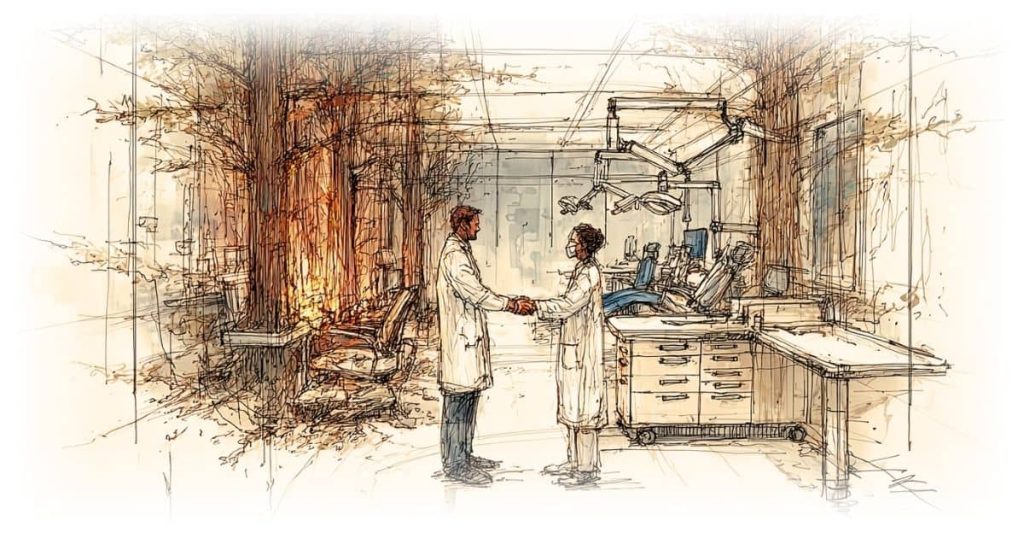
Most dentists who contact me think they have two options: stay or leave. Endure or abandon. I tell them about the middle path — the one where you keep your skills but renegotiate the terms. Where you practice enough to stay engaged but not so much that you lose yourself.
Some dentists I work with transition as I did — reducing clinical hours and building something else alongside. Others realize they want out completely, and we work on that exit without the guilt. Some discover their burnout is not about dentistry at all; it is about the specific practice environment or the life circumstances crushing them.
There is no single answer. But there is always more possibility than the binary we have been taught to see.
What would your dental career look like if you designed it around your life instead of fitting your life around dentistry?
Most of us never asked that question. We accepted the path as given: dental school, associateship, ownership, thirty-five years of full-time practice, retirement. But who decided full-time is the only legitimate way to use a dental degree? Who determined that staying in something that is destroying you is more honorable than adapting it to fit who you are becoming?
Nobody, really. We just absorbed those beliefs and never questioned them. Until the burnout gets bad enough that questioning becomes unavoidable.
Dr. Georgios (Amrishan) Kallivretakis